The Well Each day takes its fillSome moreSome lessOthers, too much. Each cup starts fullThen goes down the bottomless hatchQuenchinglife and progress. When we go back to the WellTime in time againWhat remains lessensAbsorbing without refilling. The Well knowsBut the bucket doesn’t— The bucket receives less and less,The drinker only droplets until nothing. Leave the
Tag: Stuttering

“When I first started, I wasn’t comfortable at all doing interviews. I’ve kind of gotten to a point where I just don’t care. If I do an interview, and I have a stutter and then I have to see a lot of things online where people say I say ‘then’ and ‘like’ a lot but
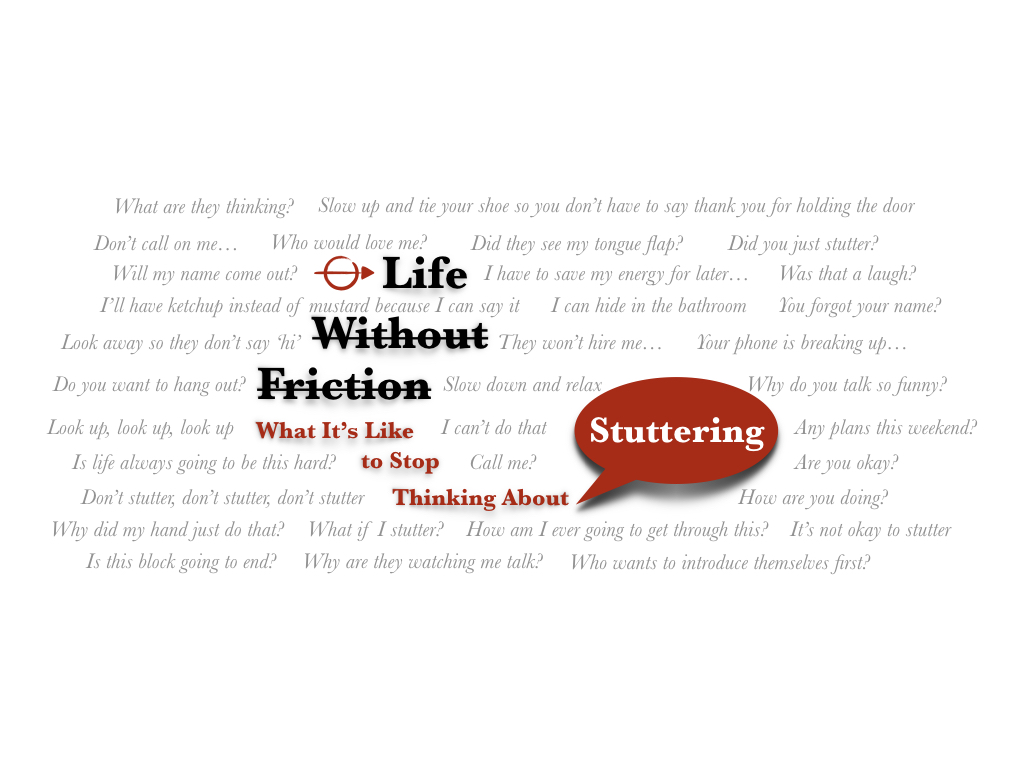
It was more of a feeling I noticed rather than a moment. I was stuttering through situations that had once paralyzed my thoughts in fear without friction. I wasn’t struggling. I didn’t avoid anything. There weren’t any maladaptive side effects to recover from, like what should have been exhaustion from open stuttering more than usual.

“Paper or plastic, sir?” asked the cashier, a middle-aged woman with a friendly face. I stumble a bit, struggling for a few seconds on plastic. It was just enough for me to get a smirk, a thought the woman had about why it took me so long to answer such a simple question. I could’ve
“I’m not sure what’s happening here…” my instructor said pointing to the tears welling up in his eyes. He failed to suppress the enormity of the moment. A middle aged, burly, and strong looking man was shaken to his core by my question. I’ve been taking a class much like Toastmasters to work on my public speaking. The

With the end of most of the mask mandates, I am confronting an uncomfortable reality—showing my stuttering, again. I hadn’t anticipated the fear and anxiety of doing so after over two years of hiding. The gut-punch landed and left me scurrying to find my bearings. It isn’t that I care what people think of how my
We who stutter need more speech-language pathologists with the courage and blunt honesty like what SpeechIRL demonstrated in their new article, “Just Stop with the Damn Disfluency Counts.” The pseudo-anonymous, united approach of this call-to-arms by SpeechIRL is commendable, and perhaps a foundation for a wider proactive movement—not just a discussion—to confront this aged-out stutter-counting practice. And that is how

Perspective Disclaimer I am not a speech-language pathologist, nor do I play one on the internet. There are many fantastic SLPs already doing wonderful work. The first article in this three-part series analyzed my journey through school-based speech therapy. In the following letter, article two, I use a unique format to express deeply held emotions

Perspective Disclaimer I am not a speech-language pathologist, nor do I play one on the internet. There are many fantastic SLPs already doing wonderful work who are waiting to work with we who stutter. This three-part series uses and analyzes my journey through school-based speech therapy as a case study, and includes my history from
During a recent engaging conversation with Dr. Hope Gerlach-Houck, I was able to talk myself through my thoughts on my own definition of concealment in stuttering. Dr. Gerlach-Houck—who is an assistant professor at Western Michigan University and a fast riser in the field of speech-language pathology—posed questions that challenged my long-held belief that I had always chosen to
 Every Waking Moment